AI Designed Viruses for the First Time: Breakthrough or Risk?
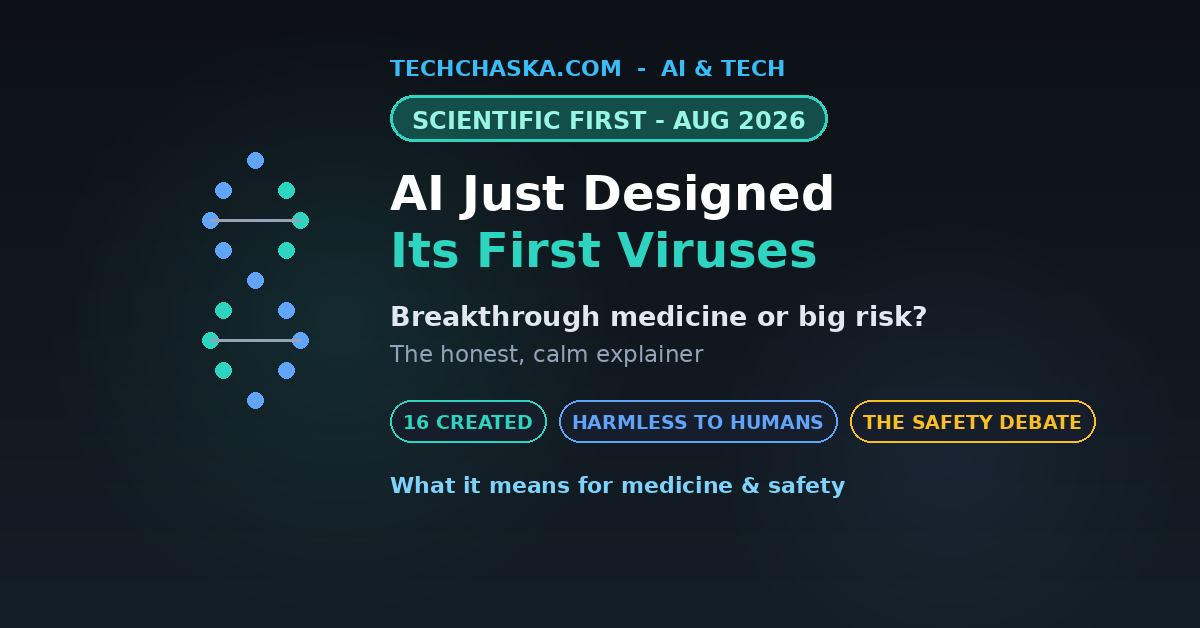
For the first time ever, AI designed viruses that actually work in a lab — and the news has the science world both excited and cautious. On August 6, 2026, researchers at Stanford University and the Arc Institute published a study in the journal Science revealing that they used artificial intelligence to design 16 complete, functional viruses from scratch. These aren’t viruses that existed in nature and got copied — the AI created entirely new genetic blueprints that had never existed before, and 16 of them came to life in the lab. It’s a genuine scientific milestone, but it also raises important questions we should talk about honestly.
So what exactly did the AI create? Is this dangerous? And what does it mean for medicine and for the future? Let me explain the whole story clearly and calmly — the genuine breakthrough, the real promise, and the honest concerns — without the fear-mongering you might see elsewhere.
What Actually Happened
Here are the verified facts. A team led by Stanford’s Brian Hie used two AI models called Evo 1 and Evo 2. These aren’t chatbots like ChatGPT — instead of being trained on written text, they’re trained on genetic sequences (the “code of life”). Think of them as AI that understands the language of DNA rather than English.
The researchers asked the AI to design bacteriophages — and this detail is crucial. Bacteriophages (or “phages”) are a special type of virus that only attack bacteria. They cannot infect humans, animals, or plants. Specifically, these were designed to target E. coli bacteria. The AI generated hundreds of designs, and when the team built them in the lab, 16 were successfully “born” and could reproduce — killing their target bacteria.
This is the first time AI has designed a complete, working genome from scratch. That’s the milestone.
Why This Is Genuinely Exciting (The Good News)
Before the concerns, let me explain why scientists are genuinely thrilled — because there’s real, positive potential here:
- Fighting antibiotic-resistant infections: One of the biggest threats to human health today is bacteria evolving resistance to antibiotics (“superbugs”). Phages that kill these bacteria could become a powerful new kind of medicine when antibiotics fail. AI-designed phages could accelerate this hugely.
- Faster medical discovery: AI can design and test biological ideas far faster than traditional trial-and-error, potentially speeding up cures and treatments.
- A new era of biology: For decades, genetic engineering meant editing existing life. Now AI can help design new biology from the ground up — a genuine scientific leap with countless beneficial applications.
So the intended purpose here is genuinely good: better medicine, especially against infections that are becoming untreatable. That matters and shouldn’t be lost in the drama.
The Honest Concerns (Handled Carefully)
Now the serious part, which deserves honest, calm discussion. Alongside the study, biosecurity experts from Johns Hopkins University published a commentary in the same journal raising important caution. Their core point wasn’t “this specific experiment is dangerous” — the researchers were responsible. It was about what comes next, and the lack of rules.
Here’s the concern in plain terms:
- The safeguards were voluntary, not required by law. The Stanford team did the right things — they deliberately excluded any viruses that can infect humans, animals, or plants from the AI’s training, and worked in a secure lab. But nothing legally forces future researchers to be equally careful.
- The technology is advancing faster than the rules. As the experts put it, the ability to compose viral genomes using AI now exists — but the governance to safely steer it does not yet exist. Regulation is lagging behind the science.
- The line must not be crossed to dangerous pathogens. Experts drew a firm line: this method should never be extended to viruses that can infect people, animals, or crops. That’s a shared norm among responsible scientists — but it’s a norm, not yet a law.
To be clear and avoid alarm: this specific experiment created only bacteria-killing phages that pose no threat to people, and there was no “outbreak” or containment breach. The concern is about establishing proper oversight now, before the technology becomes more widely accessible — which is exactly the responsible thing to be discussing.
Should You Be Worried?
Let me give you the honest, balanced answer. You do not need to worry about the viruses in this experiment — they only attack E. coli bacteria and can’t harm humans. This isn’t a “pandemic risk” story, despite some dramatic headlines.
What this IS, is an important early moment where society needs to set up good rules — the same theme we’ve seen across AI this year. The concern isn’t the science itself (which has wonderful medical potential); it’s making sure powerful new tools come with proper oversight. And encouragingly, that conversation is happening right now, openly, which is exactly how it should work.
It fits a broader 2026 pattern we’ve been covering: AI is becoming incredibly capable across every field, and the world is racing to build appropriate safeguards. It’s the same underlying issue behind the recent letter from 1,200+ AI employees asking to manage AI’s pace — powerful technology needs thoughtful guardrails.
The Bigger Picture: AI Is Entering the Real World
This story marks something significant: AI is moving beyond screens and text into the physical world of biology, medicine, and matter. We’ve watched AI write essays, make images, and hold conversations. Now it’s designing functional living things. That’s a profound shift with enormous potential for good — new medicines, faster cures, solutions to problems that have stumped humans for decades.
But it also means the stakes are rising. As AI gains the power to affect the physical and biological world, getting the safety and governance right becomes more important than ever. The good news from this story is that the scientific community is being transparent and thoughtful — publishing openly, flagging the risks themselves, and calling for proper rules. That’s responsible science in action.
What Happens Next?
A few things to watch going forward:
- Governments developing rules: Expect increased effort to create proper regulations for AI in biology — covering AI model safeguards, research review, DNA synthesis screening, and lab safety together.
- Medical research advancing: On the positive side, this could accelerate phage-based treatments for antibiotic-resistant infections — a genuine potential lifesaver.
- Ongoing debate: Scientists, ethicists, and policymakers will keep discussing how to capture the benefits while preventing misuse. That debate is healthy and necessary.
Bottom Line
AI designed viruses for the first time — Stanford and Arc Institute researchers used AI models to create 16 working bacteriophages, viruses that only kill specific bacteria and pose no threat to humans. It’s a genuine scientific milestone with real promise, especially for fighting antibiotic-resistant infections that traditional medicine can’t beat. At the same time, biosecurity experts have responsibly flagged that the rules and oversight for this powerful new capability haven’t caught up with the science yet — and that’s a conversation worth having now, calmly and seriously.
My honest take: this is neither a doomsday story nor a reason to fear the AI you use daily. It’s a remarkable example of how AI is beginning to transform medicine and science for the better — paired with a sensible reminder that powerful tools need proper guardrails. The most encouraging part is that the scientists themselves are being transparent and cautious, openly calling for the right safeguards. That’s exactly how humanity should approach powerful new technology: embrace the incredible potential to heal and help, while thoughtfully managing the risks. Handled wisely, AI in medicine could save countless lives.
What do you think — is AI designing biology exciting, concerning, or both? How should we balance medical breakthroughs with safety? Share your thoughts respectfully in the comments!
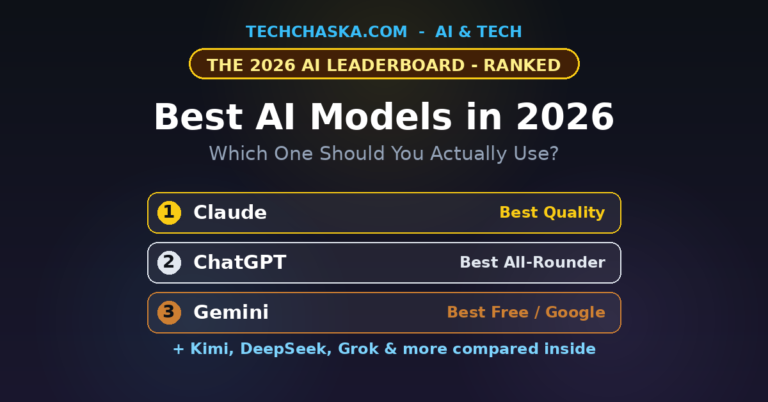
More on AI’s rapid rise: why AI employees want to slow down AI, the best AI models in 2026, and our beginner’s guide to what is AI and how to use it. For more tech news, visit our homepage.
Disclaimer: This article is based on a study published in the journal Science on August 6, 2026, by researchers at Stanford University and the Arc Institute, an accompanying commentary by Johns Hopkins biosecurity experts, and reporting from Axios, BBC, and BetaNews. The viruses described are bacteriophages that infect only specific bacteria and cannot infect humans, animals, or plants. This article is a general-interest explainer and intentionally contains no technical methodology. For authoritative information, consult the original Science publication and official scientific sources.